
Up for the challenge
For most of my fitness career, strength training has been the foundation of how I move and train. I’ve always loved the structure of resistance workouts, the feeling of getting stronger over time, and the confidence that comes from challenging yourself physically in a way that carries over into everyday life. Long-distance running, however, was a completely different story. It was never something I naturally gravitated toward and honestly, for years I avoided it altogether.
Earlier this year, though, I found myself wanting a new challenge and honestly, a way to channel stress into something productive! After spending so much time focused on building the app and working behind the scenes, I was craving something that would push me outside of my normal routine both physically and mentally. Around the same time, my husband suggested we sign up for a half marathon together. My initial reaction was hesitation because if you had asked me even a year ago whether I would ever willingly train for a long-distance race, the answer would have been an immediate no. But the more I sat with the idea, the more I realized I wasn’t necessarily looking to become “a runner.” What I really wanted was a goal that felt unfamiliar enough to challenge me in a completely different way.
That experience ultimately became the inspiration behind STRIDE.
Not because STRIDE is strictly a running program, but because the process taught me how valuable it is to combine strength training and cardio in a way that feels balanced, realistic, and sustainable. Instead of viewing strength and endurance training as separate things competing for your time and energy, I started to see how well they could support one another when programmed intentionally.
What is STRIDE?
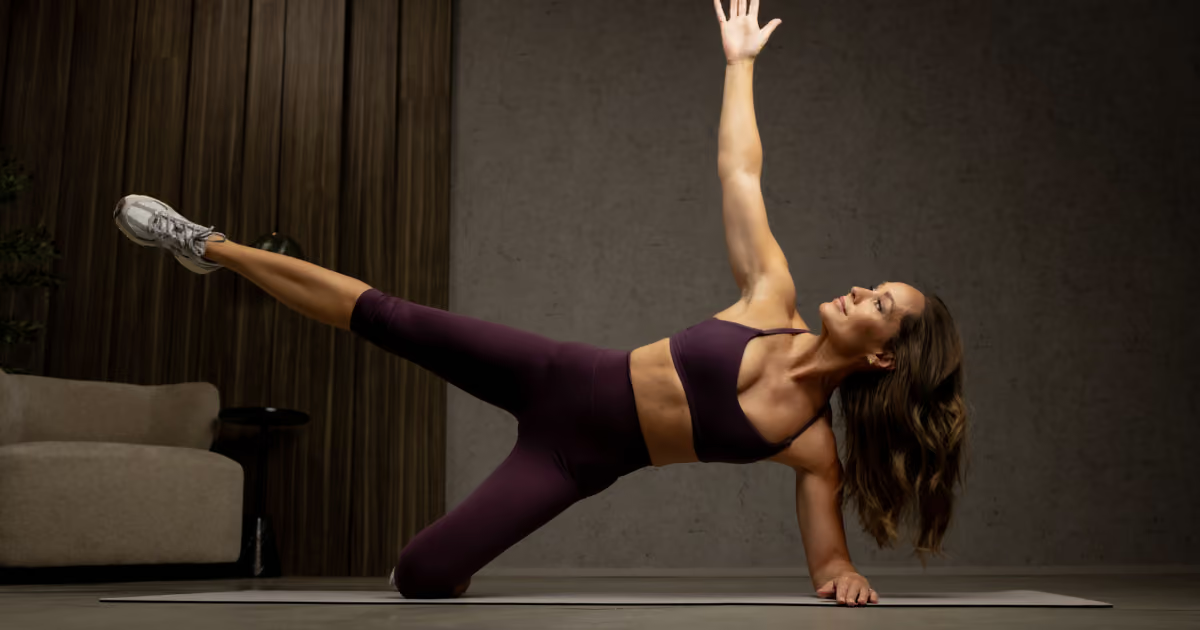
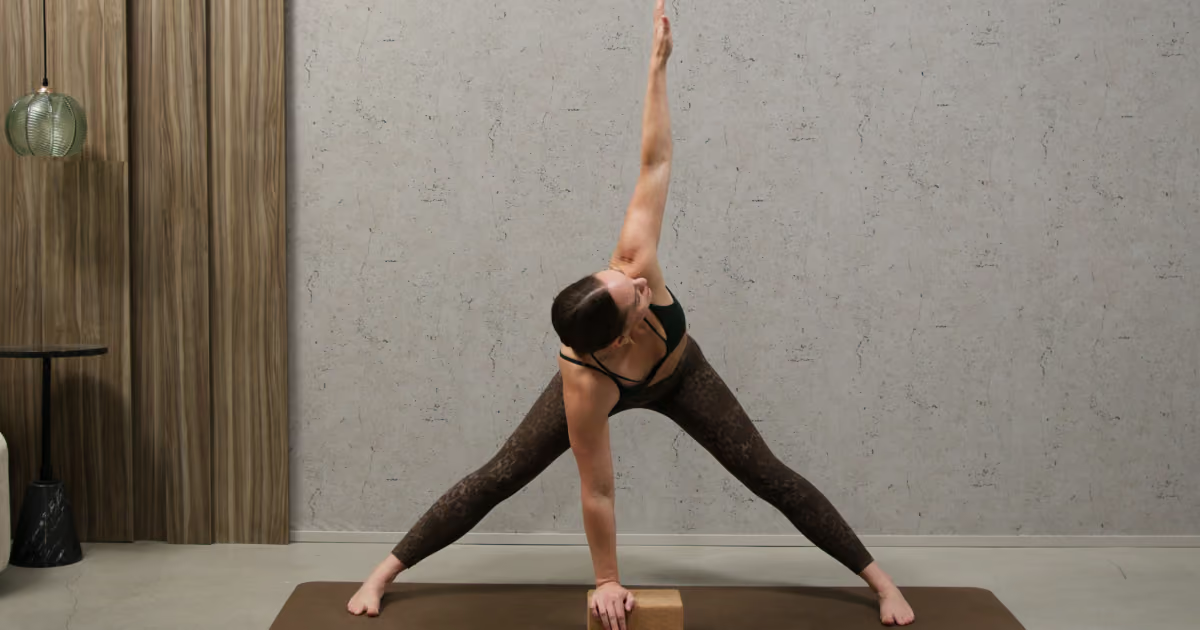
STRIDE is a 10-week strength and conditioning program built around a simple 3-day-per-week training split. The program was designed to help you build strength while still leaving room in your week for other forms of movement and activities that you enjoy. For some people, that might be running or race training. For others, it could mean walking, hiking, cycling, sports, or simply having more flexibility and recovery built into their routine.
One of the biggest goals with STRIDE was creating a program that felt adaptable to real life. So many workout plans are built around the idea that fitness should take priority over everything else, but for most people that simply is not realistic long term. Work schedules change, energy levels fluctuate, families need attention, and sometimes life gets busy. Rather than creating a program that requires perfection to see progress, I wanted STRIDE to feel supportive and manageable enough that people could stay consistent with it over time.
The three-day structure is what makes that possible. Instead of trying to cram strength workouts into an already overloaded week, STRIDE creates space. Space for recovery, space for cardio if you want to add it, and space to build a routine that feels sustainable rather than exhausting.
Why strength training and cardio work so well together
One of the things I noticed while training for my half marathon was how much better my body handled the increasing mileage because I continued strength training throughout the process. I wasn’t simply logging run after run and hoping my body would adapt. The resistance training sessions helped support my joints, improve stability, strengthen my posterior chain and core, and maintain overall muscle balance as my cardio volume increased.
At the same time, adding structured endurance work challenged me in ways strength training alone never had. My cardiovascular fitness improved, my recovery capacity improved, and I started to appreciate movement from a completely different perspective. Instead of chasing intensity every single day, I learned how important balance actually is when it comes to long-term progress.
What surprised me most was that simplifying my training often left me feeling stronger overall. By focusing on three quality strength sessions each week and strategically adding cardio around them, I no longer felt like I was constantly trying to recover from my workouts. My energy felt more stable, my body felt more resilient, and the entire process became much more enjoyable than I expected it would be. That balance between strength, conditioning, and recovery became the foundation for STRIDE and heavily influenced the way the program is structured today.
You do not need to be a runner to follow STRIDE
Although my own experience training for a half marathon inspired the program, STRIDE was never intended to be exclusively for runners. In fact, one of the most important things I want people to understand is that running is completely optional.
The program itself is a full-body strength and conditioning routine that stands on its own perfectly well. The reason the structure works so effectively for runners is because it leaves enough flexibility in the week to add cardio-based activities without overwhelming your schedule or compromising recovery. But that same flexibility is equally beneficial for anyone who simply wants a more balanced approach to fitness.
Some people may use STRIDE alongside a race training plan, while others may use it to support daily walks, hiking, cycling classes, or recreational sports. Some may choose not to add any formal cardio at all and simply enjoy the three-day strength structure as a sustainable long-term routine. The program is designed to support all of those approaches rather than forcing everyone into the exact same definition of fitness.
Inside the downloadable STRIDE PDF, I’ve included optional walking and running progressions for anyone who wants additional guidance. These range from beginner step goals all the way up to 5K, 10K, and half marathon training plans, but they are intended to complement the strength workouts rather than replace them.
Training for my first half marathon
Training for my first half marathon taught me a lot about both fitness and mindset. Going into it, I genuinely did not consider myself “a runner,” and there were definitely moments throughout the process where I questioned whether I had taken on something completely outside of my comfort zone. But looking back now, I think that was exactly why the experience was so valuable.
There were days where the runs felt great and days where they felt incredibly hard. There were moments where balancing strength workouts and endurance training took some adjustment, especially as the mileage increased, but having a structured plan made a huge difference. Instead of feeling like I had to choose between strength and cardio, STRIDE allowed both to coexist in a way that felt manageable and productive.
Originally, we had planned to run the race in Hawaii and sneak in some R&R as well. Unfortunately, the island was experiencing severe weather and flooding so we made a last minute decision to cancel. After spending weeks training and preparing, I knew I still wanted to follow through with the goal, so we quickly found another race happening in Calgary the very same weekend and signed up just in time.
Now the route may not have been as scenic but crossing that finish line, with my family cheering me on, was one of the most rewarding experiences I’ve had in a long time. Not because of the race itself, but because of what the process represented. It reminded me that growth often happens when we step outside the routines and identities we become comfortable holding onto. It also reinforced something I talk about often within this community: progress rarely comes from doing things perfectly. More often, it comes from showing up consistently, adapting when needed, and trusting the process even when it feels uncomfortable.
A program designed for real life
At the end of the day, STRIDE is not about becoming a runner or forcing yourself into a specific style of training. It’s about building a strong, capable body while creating enough flexibility in your routine to actually enjoy the process along the way.
Whether your goal is to improve your strength, increase your daily movement, train for an event, or simply find a more balanced approach to fitness, STRIDE was designed to support that journey without requiring fitness to take over your entire life. The workouts are structured and progressive, but they are also approachable and adaptable enough to work alongside busy schedules, changing priorities, and different experience levels.
Inside the app, you can also customize your schedule by adding your own activities directly to your calendar, tracking your workouts, monitoring your progress, and building a routine that reflects your lifestyle rather than trying to force yourself into someone else’s.
For me, STRIDE represents a shift away from the idea that more is always better. It’s a reminder that training should support your life, not consume it, and that some of the best results come from finding a balance you can genuinely sustain.
Ready to find your stride? Get started now with a free trial!