
What Stride reinforced about sustainable training
When I first introduced Stride, I shared the story behind why I created it.
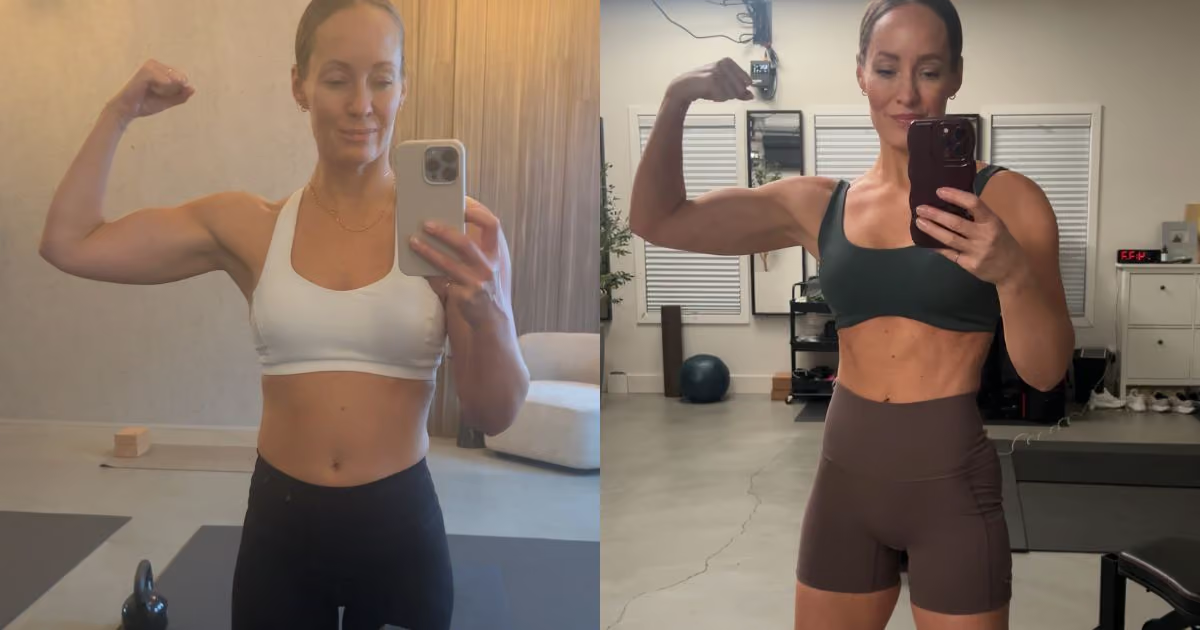
I had just finished training for my first half marathon and realized something that challenged the way many people think about endurance training. I wasn't logging endless miles or spending hours working out every day. Instead, I continued prioritizing strength training while strategically adding cardio throughout the week, and I finished feeling stronger, healthier, and more energized than I expected.
Now that the program has officially wrapped up, I can c, and happily, say that experience wasn't unique to just me.
Over the past ten weeks, thousands of people have worked through Stride using the program in their own unique ways. Some trained for races. Others simply wanted to become stronger while maintaining an active lifestyle and added in sports, hikes, bike rides. Many weren't runners at all but focused on getting in their daily steps
What connected everyone's experience wasn't the distance they covered or the pace they ran. It was the realization that fitness doesn't have to be all or nothing.
More isn't always better
One of the biggest misconceptions in fitness is that improving one area requires sacrificing another.
Want to become a better runner? Stop lifting.
Want to build strength? Forget cardio.
In reality, the opposite is often true.
Strength training helps improve movement efficiency, supports healthy joints, increases stability, and builds the muscular endurance needed to perform better during cardio-based activities. Likewise, cardiovascular training supports heart health, work capacity, recovery, and overall fitness.
These aren't competing goals. They're complementary. That philosophy became the foundation for STRIDE. Rather than asking people to choose between strength and endurance, the program was built to show how both can work together in a way that's practical and sustainable.
The best program is the one you can stick with
Perhaps the biggest lesson STRIDE reinforced is that consistency almost always beats perfection.
Some people followed one of the optional walking or running progressions included with the program. Others swapped running for cycling, hiking, rowing, pickleball, or other activities. Many completed only the three weekly strength workouts.
Every one of those approaches is valid.
Fitness should fit your life, not force your life to revolve around fitness.
When a program allows flexibility instead of demanding perfection, you're much more likely to keep showing up week after week. That's where real progress happens.
Strength is about more than lifting weights
Throughout Stride, the workouts focused on much more than simply getting stronger.
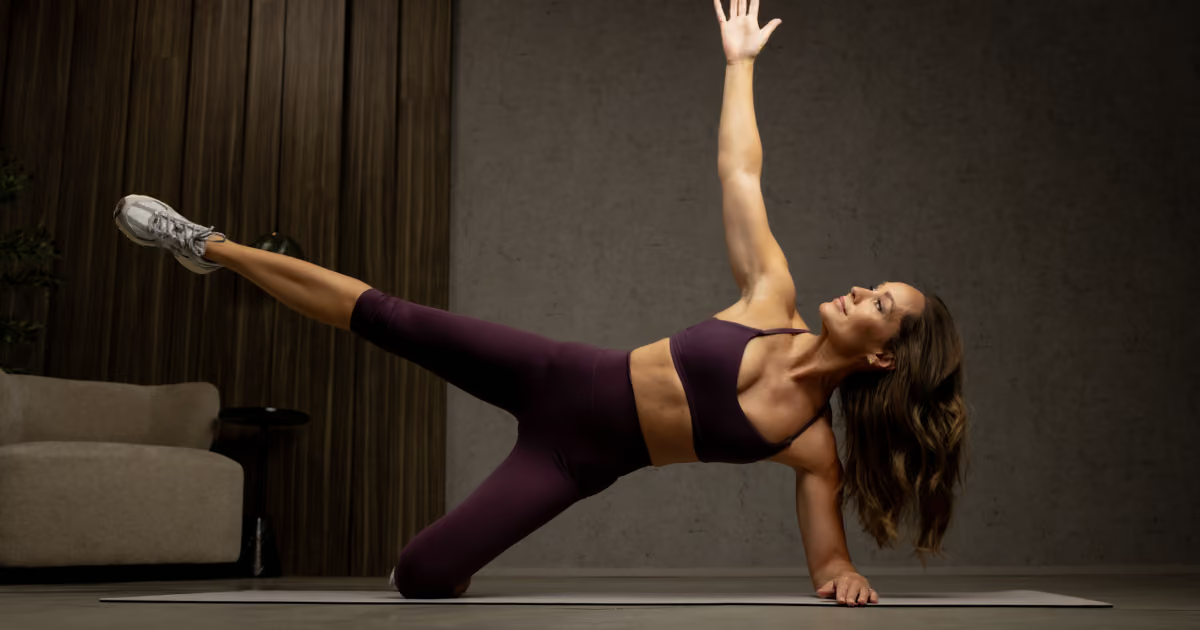
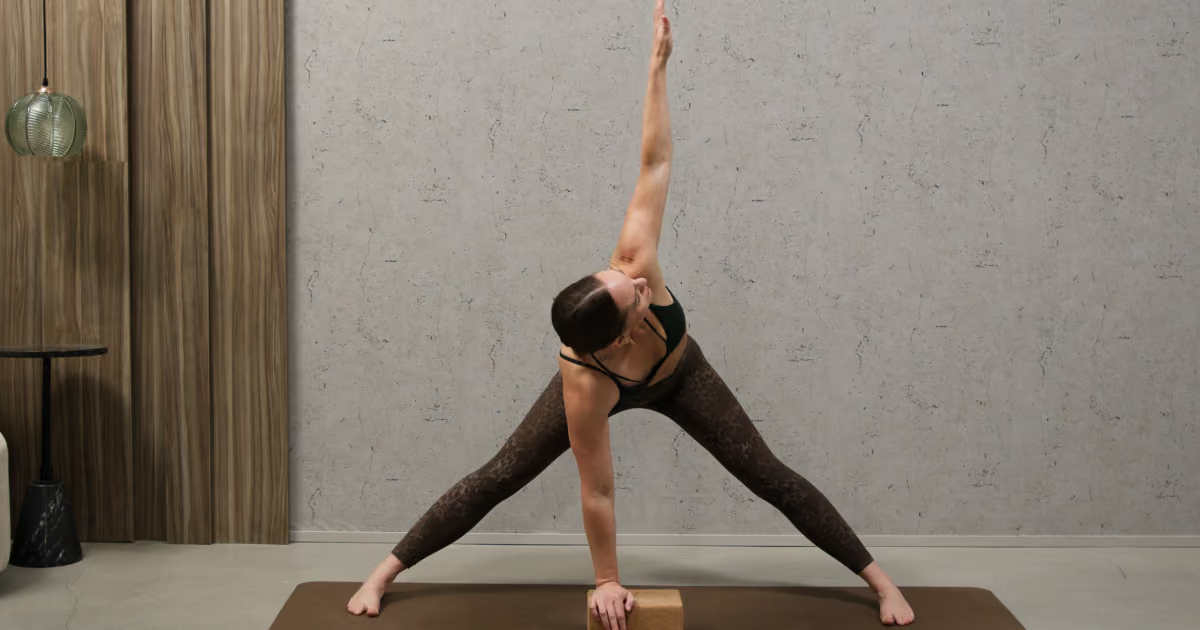
By combining unilateral movements, balance work, mobility, core stability, and functional strength, the goal was to help people move better in every aspect of life.
Whether you're running a race, hiking with friends, carrying groceries, chasing after your kids, or simply wanting to feel more confident in your body, movement quality matters.
Strength isn't just measured by how much weight you can lift. It's reflected in how efficiently and confidently your body moves every day.
My biggest takeaway
Training for my first half marathon changed the way I think about fitness, but creating Stride reinforced something I've believed for years.
The healthiest approach isn't about chasing extremes.
It's about building a routine that challenges you, gives your body variety, and leaves enough room for recovery so you can continue showing up tomorrow, next month, and years from now.
That idea extends far beyond running.
Whether your goal is building muscle, improving endurance, increasing energy, or simply feeling stronger as you get older, the principles remain the same. Train consistently. Prioritize strength. Include cardiovascular exercise. Make time for mobility and recovery. Find a routine that supports your lifestyle instead of competing with it.
Progress becomes much more sustainable when your training works with your life instead of against it.
What's Next?
Balanced training will always be a central part of how I design programs because our bodies thrive on strategic variety. Different training methods challenge us in different ways, helping us avoid plateaus, reduce overuse, and continue making progress over the long term.
If you've been thinking about adding more structure to your workouts, Stride remains one of my favorite recommendations for anyone looking to combine strength with an active lifestyle. Whether you're training for a race, enjoy hiking or cycling, or simply want a sustainable three-day strength routine that leaves room for the rest of your life, it's designed to meet you where you are.
Because at the end of the day, finding your stride isn't about crossing a finish line.
It's about discovering a way of training that you genuinely enjoy and can continue for years to come.
My app gives you the ability to adjust the schedule of any of my programs so you can work at a pace that feels right for you, your goals and your lifestyle.
Sign up today for a free 7 day trial!