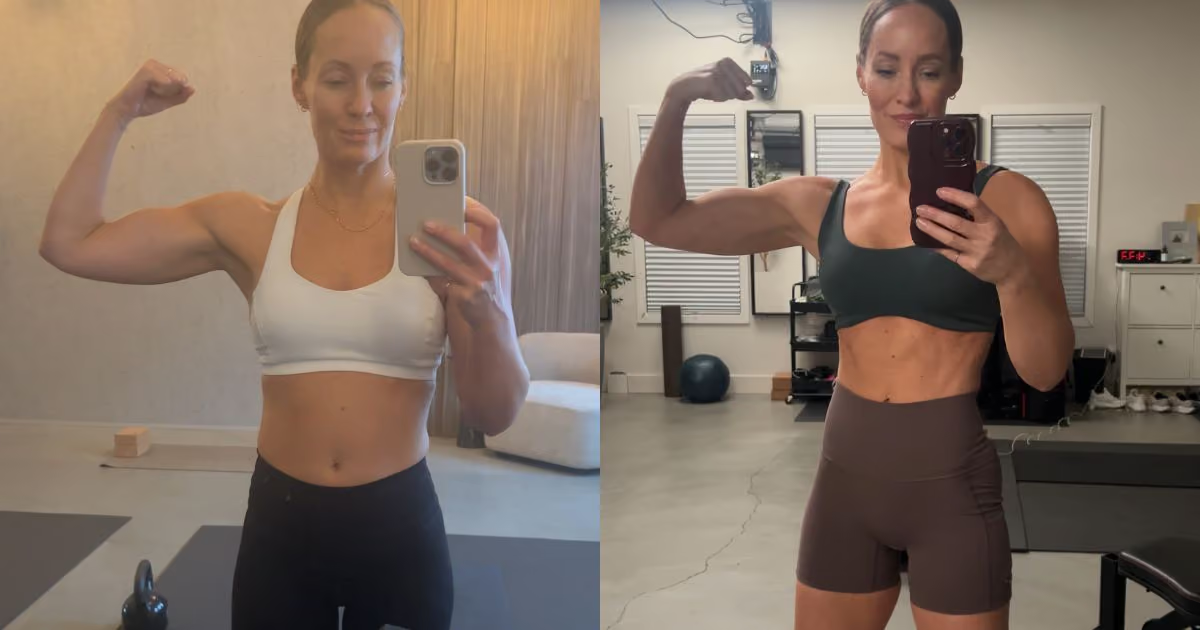

Why using a variety of training methods leads to better, longer-lasting results
If you've ever followed a workout routine that delivered great results in the beginning but eventually stopped working, you're not alone. One of the most common reasons progress stalls is because the body adapts to the demands being placed on it. While adaptation is a sign that your fitness is improving, it also means that doing the same type of training over and over can eventually lead to plateaus.
To continue getting stronger, leaner, more energized, and more resilient, your body needs varied and intentional challenges. That's where combining different training methods, including strength, hypertrophy, conditioning, and mobility work, becomes so valuable.
Why one type of training isn't enough
Every style of training creates a different adaptation within the body. When you rely too heavily on one method, you miss out on the unique benefits that other forms of exercise can provide.
For example, cardio is excellent for improving endurance and cardiovascular health, but it does little to preserve or build muscle mass. Heavy strength training can increase force production and overall strength, but without conditioning work, you may find your stamina and recovery suffer. Mobility training helps you move and feel better, but on its own, it won't provide the strength or cardiovascular benefits needed for long-term fitness.
A well-rounded training approach supports your body from every angle, helping you build strength, improve endurance, move more efficiently, and stay consistent over time.
Strength training: The foundation
Strength training focuses on challenging your muscles with heavier loads to build force, power, and resilience. It serves as the foundation of a well-rounded fitness routine and supports nearly every aspect of long-term health and performance.
Key benefits of strength training include:
- Building and maintaining lean muscle mass
- Supporting bone density and reducing age-related bone loss
- Improving joint stability and overall movement quality
- Enhancing posture and core strength
- Increasing metabolism and daily calorie expenditure
- Making everyday activities feel easier and more manageable
Hypertrophy training: Building lean muscle and definition
Hypertrophy training focuses on muscle growth through moderate weights, higher repetitions, and increased training volume. This style of training helps improve both the size and endurance of your muscles while increasing your overall training capacity.
Key benefits of hypertrophy training include:
- Supporting muscle growth and definition
- Improving muscular endurance and stamina
- Enhancing body composition
- Increasing strength potential over time
- Improving performance during longer workouts
- Helping create visible changes in muscle tone and shape
Conditioning: Supporting heart health and performance
Conditioning workouts challenge the cardiovascular system and improve your body's ability to produce and sustain energy. Whether through HIIT, circuits, or traditional cardio, conditioning plays an important role in overall fitness and longevity.
Key benefits of conditioning include:
- Improving heart and lung health
- Increasing cardiovascular endurance
- Boosting energy levels throughout the day
- Enhancing recovery between workouts
- Supporting body composition goals
- Improving overall work capacity and athletic performance
Mobility: The glue that holds it all together
Mobility training helps improve your ability to move actively and with control through a full range of motion. While often overlooked, mobility supports everything from workout performance to recovery and injury prevention.
Key benefits of mobility training include:
- Reducing stiffness and joint discomfort
- Improving movement quality and flexibility
- Supporting proper exercise technique
- Enhancing recovery between training sessions
- Lowering injury risk
- Helping you move more comfortably and confidently in everyday life
While strength, hypertrophy, conditioning, and mobility form the foundation of a balanced fitness routine, Pilates offers another valuable training method that can enhance both performance and recovery. Its focus on core strength, stability, and movement quality makes it an excellent complement to almost any fitness program.
Pilates: Building core strength and body awareness
Pilates focuses on controlled, intentional movement patterns that strengthen the body from the inside out. With an emphasis on core stability, posture, balance, and mind-muscle connection, Pilates complements other training methods by helping you move more efficiently and with greater control.
Key benefits of Pilates include:
- Strengthening the deep core muscles that support the spine
- Improving posture and body alignment
- Enhancing balance, coordination, and stability
- Increasing body awareness and movement control
- Supporting joint health through low-impact exercise
- Improving flexibility and mobility
- Helping reduce aches and pains associated with poor posture or prolonged sitting
- Complementing strength training by improving technique and movement quality
- Supporting recovery while still building strength and endurance
- Creating a stronger mind-body connection during exercise
Why variety matters more as we age
As women move through their 30s, 40s, and beyond, factors such as recovery, joint health, hormone fluctuations, and nervous system fatigue begin to play a larger role in overall fitness. Constantly pushing the body in the same way can eventually lead to overuse injuries, burnout, or stalled progress.
Strategic variation allows your body to continue adapting without accumulating excessive fatigue. Different training phases challenge different systems while giving others an opportunity to recover. This helps improve long-term consistency, which is ultimately the biggest predictor of success.
It's important to note that variety doesn't mean random workouts. Effective programming uses different training methods with intention, ensuring that each phase builds upon the last while moving you toward a larger goal.
What this looks like in real life
A balanced fitness program may include periods where the primary focus is building strength, followed by phases that emphasize muscle growth and endurance. Conditioning workouts can be incorporated throughout the week to support cardiovascular health and overall fitness, while mobility work remains a consistent component to help your body recover and move well.
This type of structure keeps training both challenging and sustainable. It allows you to continue progressing without feeling stuck, overwhelmed, or burned out.
The bottom line
The most effective fitness routines aren't necessarily the most intense or extreme. They're the ones that provide the right balance of challenge, recovery, and progression.
By combining strength, hypertrophy, conditioning, and mobility training, you create a well-rounded approach that supports your body's strength, energy, and resilience over the long term. You'll be better equipped to avoid plateaus, reduce injury risk, and continue making meaningful progress year after year.
This philosophy is the foundation of every program I create inside the Heather Robertson App. By strategically combining different science-backed training methods, these programs help you challenge your body in new ways, stay motivated, and continue progressing without the guesswork. Bonus points - it makes each session fun too!
Join now and choose from a variety of programming to keep that body guessing and acheive longer lasting results